
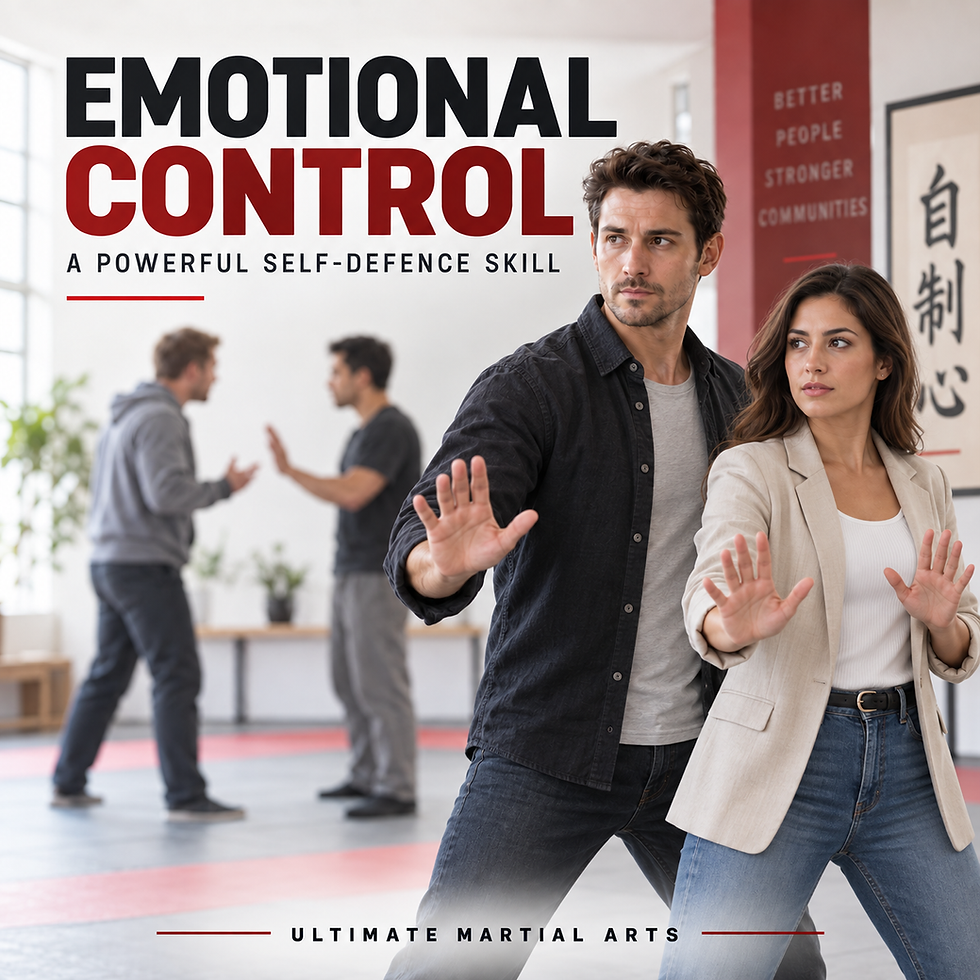
Emotional Control: A Powerful Self-Defence Skill
Here is another of our Personal Protection articles designed to build self-defence skills.
,
In moments of conflict, pressure or danger, anger can rise quickly. Adrenaline rises, the body tenses, and emotions can begin to take control.
Anger may create the feeling of strength, but in a real confrontation, it can become a serious weakness.
When anger takes over, awareness narrows, judgment suffers and people often react without considering the consequences. This can escalate a situation that may otherwise have been avoided or resolved safely.
True strength is the ability to remain in control.
A calm mind allows you to recognise potential danger, assess what is happening and make better decisions. It helps you communicate clearly, maintain a safe distance, set firm boundaries and respond appropriately if action becomes necessary.
The difference between panic and control—or escalation and resolution—often comes down to one essential skill:
Emotional discipline.
Why Emotional Control Matters in Self-Defence
Many people believe self-defence is mainly about learning physical techniques such as strikes, blocks and escapes.
However, some of the most important moments occur before anything becomes physical—during verbal conflict, intimidation, aggressive behaviour or an uncertain situation.
Without emotional control, even someone with physical training can make poor decisions. They may react too quickly, become drawn into an argument or use more force than the situation requires.
Effective self-defence means remaining aware, managing your emotions and choosing the safest possible response.
At Ultimate Martial Arts, we teach students that personal safety begins with the mind. Physical skills are important, but they must be supported by awareness, discipline and good decision-making.
Our training helps students develop:
Calmness and control under pressure
Situational awareness and early threat recognition
Confidence without aggression
Verbal de-escalation and boundary-setting skills
Safe distance and positioning
Decisive and proportionate responses when physical action is unavoidable
The judgment to disengage and leave whenever possible
We do not teach students to go looking for confrontation.
We teach them how to recognise danger early, avoid unnecessary conflict and protect themselves responsibly when no other safe option is available.
Training the Mind and Body
Emotional control is not something people automatically have under pressure. Like any other skill, it must be practised.
Through structured martial arts training, students learn how to manage discomfort, remain focused and make decisions while experiencing pressure. Over time, this develops genuine confidence—not confidence based on aggression or ego, but confidence built through preparation and self-control.
These skills can benefit children, teenagers and adults in many areas of life, including school, work, relationships and challenging situations in the community.
Whether you want to improve your personal safety, build confidence or help your child become more focused and resilient, Ultimate Martial Arts provides practical training in a supportive and non-aggressive environment.
Train With Purpose
Real self-defence is not simply knowing how to strike.
It is knowing how to remain calm, recognise danger, make good decisions and respond appropriately.
Control your emotions. Strengthen your awareness. Protect yourself responsibly.
To learn more about our martial arts and practical self-defence programs, contact Ultimate Martial Arts or book a trial session.
Ultimate Martial Arts Confidence. Discipline. Resilience. Personal Safety.
Vincent Busuttil Chief Instructor


Comments